Reynisfjara in winter versus summer, and which one to pick
Two very different beaches wear the same name. Honest field notes on Reynisfjara in winter (ice, storms, short days, northern lights) against summer (midnight sun, puffins, crowds), and how to choose.
 By Björn Einarsson, Iceland South Coast tour guide and local specialist
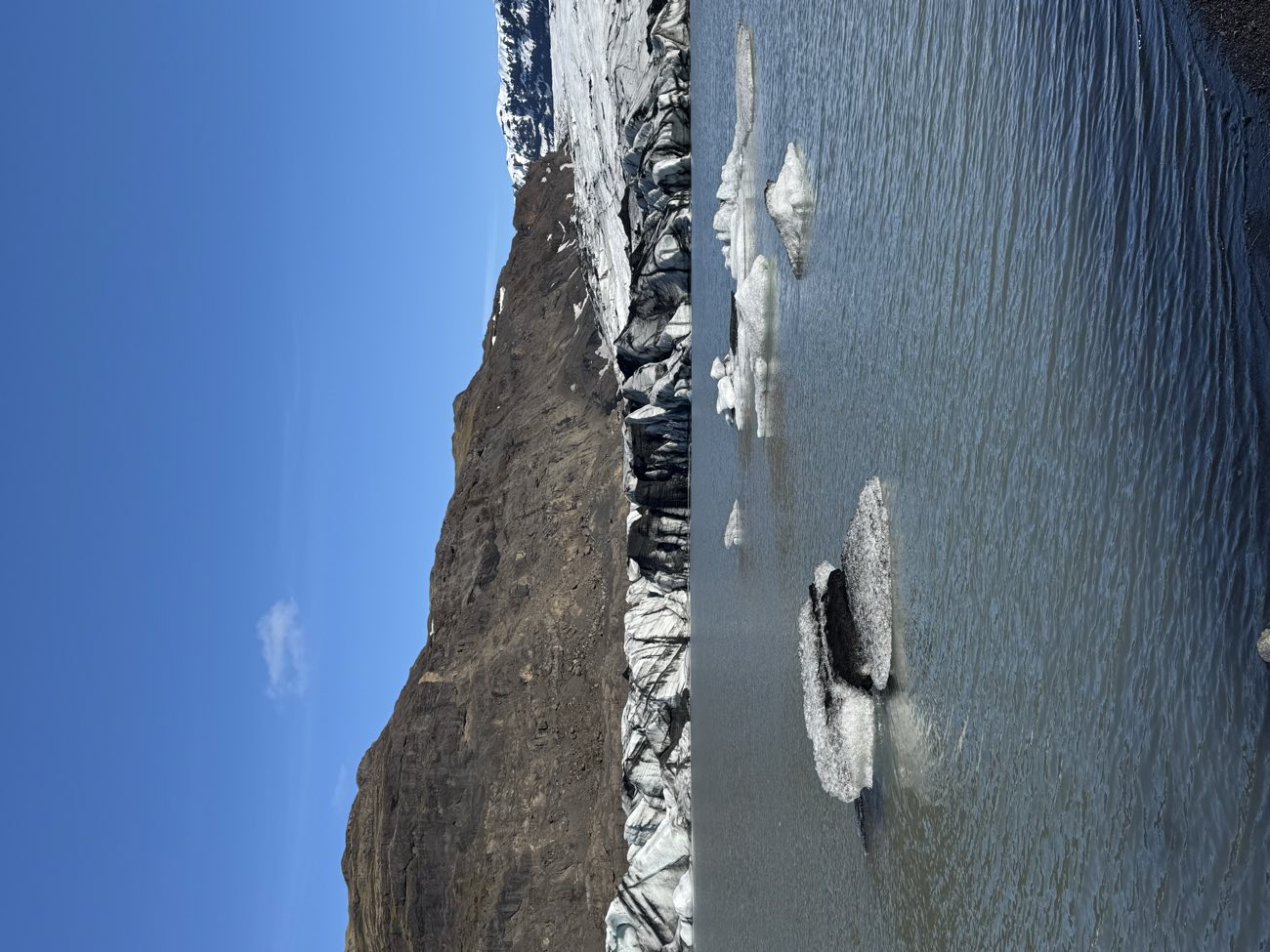
I have stood on Reynisfjara in a January storm with sea spray freezing on my jacket, and I have stood on it at eleven at night in June with the sun still up and my shadow stretched forty feet across the sand. Same beach, same sea stacks, same deadly waves. Almost nothing else about the two visits was alike.
People ask me which season is better. It is the wrong question. They are different beaches, and the right one depends entirely on what you came north to find.
What is Reynisfjara like in winter?
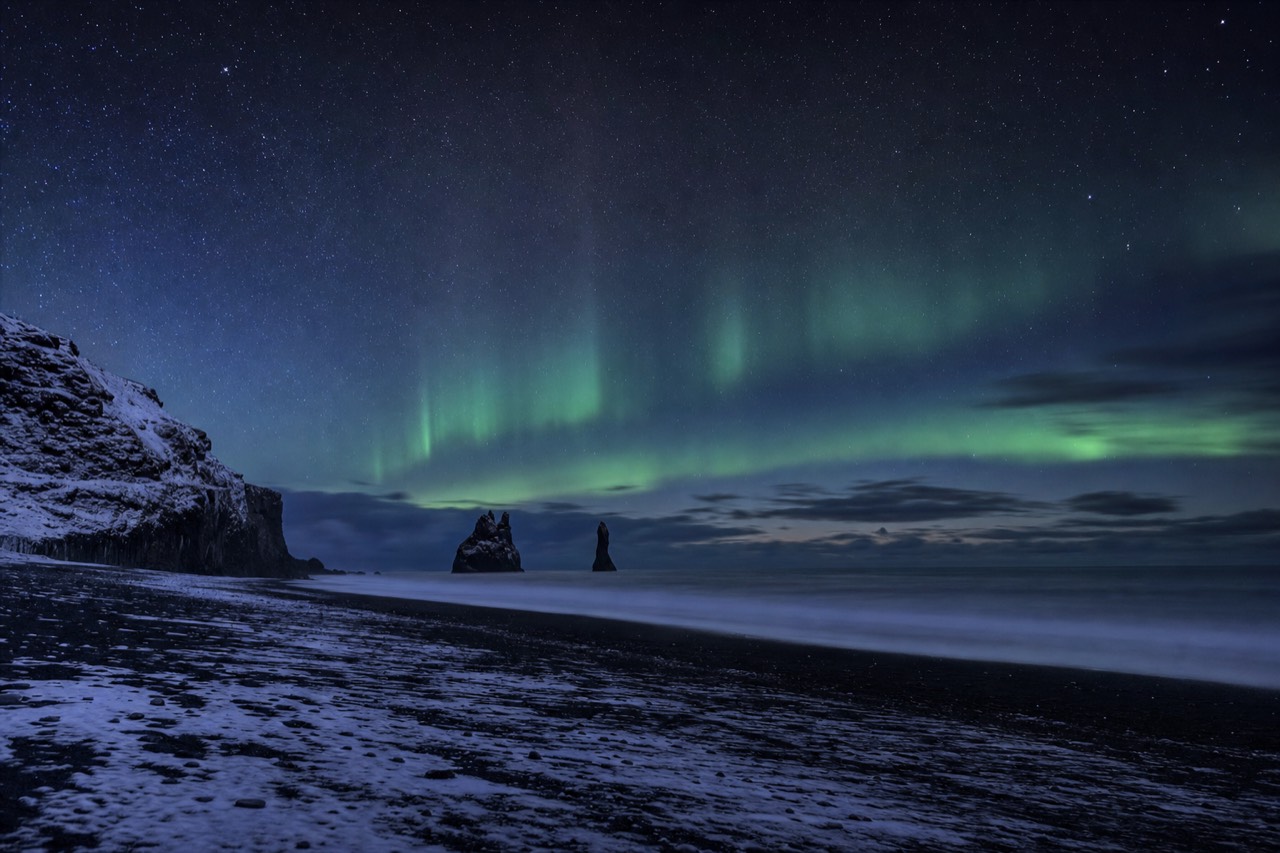
Short golden days, dangerous storm surf, near-empty columns, and a real shot at the northern lights. Winter strips Reynisfjara down to something elemental. The days are short, sometimes only four or five hours of proper light, so you are working with a narrow window and the sun sits low the whole time, painting everything gold or leaving it in a blue dusk. Storms roll in hard off the Atlantic, and when they do the surf is genuinely frightening, which at this beach means genuinely dangerous. Frost and ice can glaze the black pebbles, and the basalt columns wear a rime of white.
The reward is space and sky. Far fewer people come in winter, so you can get the columns almost to yourself, and after dark, if the cloud breaks and the forecast is kind, the northern lights are on the table. That is a combination summer simply cannot offer. Do note the day trip runs by daylight and turns back before dark, so an actual aurora hunt is a separate evening tour from Reykjavik, and you can check availability here.
The cost is real, though. Route 1 in winter is no joke, with ice, wind, and blowing snow closing roads at short notice. This is the season where handing the driving to someone else stops being a convenience and starts being a safety decision.
What is Reynisfjara like in summer?
Endless daylight, milder weather, open roads, nesting puffins nearby, and busy midday car parks. Summer flips everything. The midnight sun means you effectively cannot run out of daylight, so a late-evening visit gives you soft golden light and, often, far thinner crowds than the midday rush. Puffins nest on the nearby cliffs from around May into August. The weather is milder, the roads are open, and the whole coast feels approachable.
The catch is everyone else knows this. Midday in July, the Reynisfjara car park fills and the columns come with a queue for photos. The beach is still magnificent; you just share it. And the one thing summer does not change is the sea. The sneaker waves that kill people are exactly as dangerous in warm July sunshine as in a January gale. Warm weather makes people careless, which is its own quiet hazard.
How do the two seasons compare directly?
One table, the differences that actually matter, from daylight and crowds to the roads and the sea.
| Feature | Winter | Summer |
|---|---|---|
| Daylight | Short, 4 to 6 hours, low golden sun | Endless, midnight sun in June |
| Crowds | Sparse, columns often near empty | Busy midday, thinner late evening |
| Northern lights | Possible on clear nights | No, sky never dark enough |
| Puffins | Gone, out at sea | Nesting nearby, roughly May to August |
| Roads | Ice, wind, sudden closures | Open and straightforward |
| The sea | Deadly, wilder in storms | Deadly, unchanged by the sunshine |
| Underfoot | Frost, ice on the pebbles | Coarse black pebble, no ice |
So which season should I pick?
Winter for drama, solitude and the aurora; summer for long light, puffins and easy roads. If you want drama, solitude, and a shot at the aurora, and you accept short days and hard driving, come in winter. If you want long relaxed light, puffins, easy roads, and you can stomach sharing the beach, come in summer, and go late in the evening to dodge the worst of the crowds.
Either way, the sea does not care which season you chose. Reynisfjara's sneaker waves have killed visitors in both, so the rules never change: stay well up the beach and never turn your back on the water.
Whichever season you land on, the easiest way to stand on this beach without wrestling Route 1 yourself is the guided [South Coast day trip](https://www.getyourguide.com/reykjavik-l30/southern-iceland-tour-t67018/?partner_id=MME1WGW&utm_medium=online_publisher) from Reykjavik, which runs the whole coast year round and takes the winter ice or the summer parking scramble off your plate.
What would I choose myself?
With only one shot, I would take the winter coast for the thing I could not get anywhere else. If it were my own trip and I had only one shot, I would weigh what I could not get anywhere else. Summer gives you an easy, beautiful, busy beach. Winter gives you something rarer: a dark, storm-scoured coast with the northern lights overhead and hardly a soul around, paid for in daylight and driving nerves. Neither is the wrong answer. But do not expect the summer beach in January or the winter one in July. They only share a name.