What Reynisfjara black sand beach is actually like now
A first-person walk on Reynisfjara after the 2026 storms: the coarser sand, the basalt columns, the sea stacks, and how close the waves really get. Honest notes from the shore.
 By Björn Einarsson, Iceland South Coast tour guide and local specialist
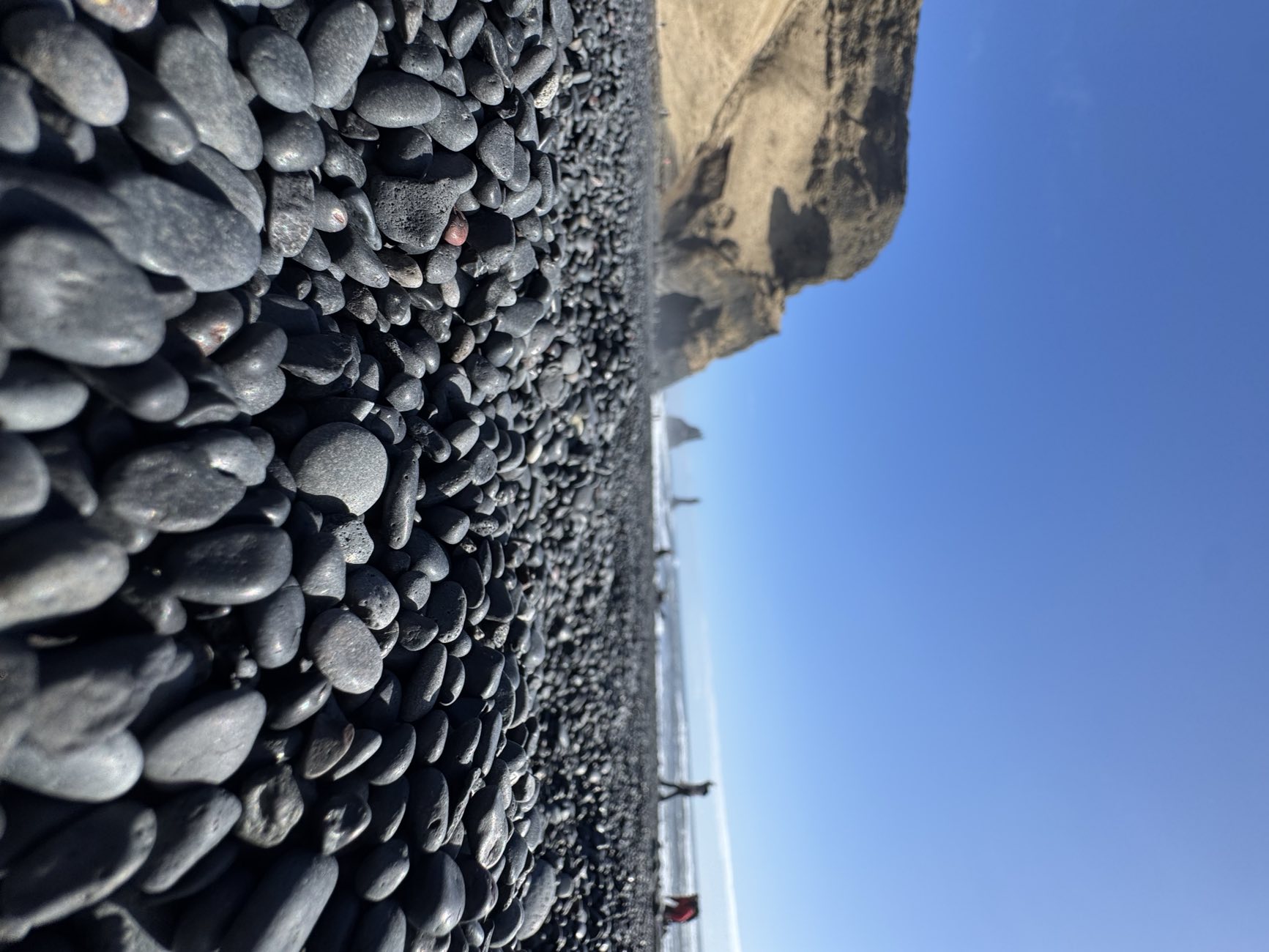
The first thing that hits you at Reynisfjara is the sound. Not the sea, though that is loud enough. It is the rattle of the pebbles: thousands of smooth black stones dragging back down the slope every time a wave pulls out. You feel it before you understand it, a low grinding roar under everything.
I have walked this beach in four seasons, and I came back in 2026 to see what the storms had done. The honest report is below, sand and stones and all.
Is the sand still the perfect black powder from the photos?
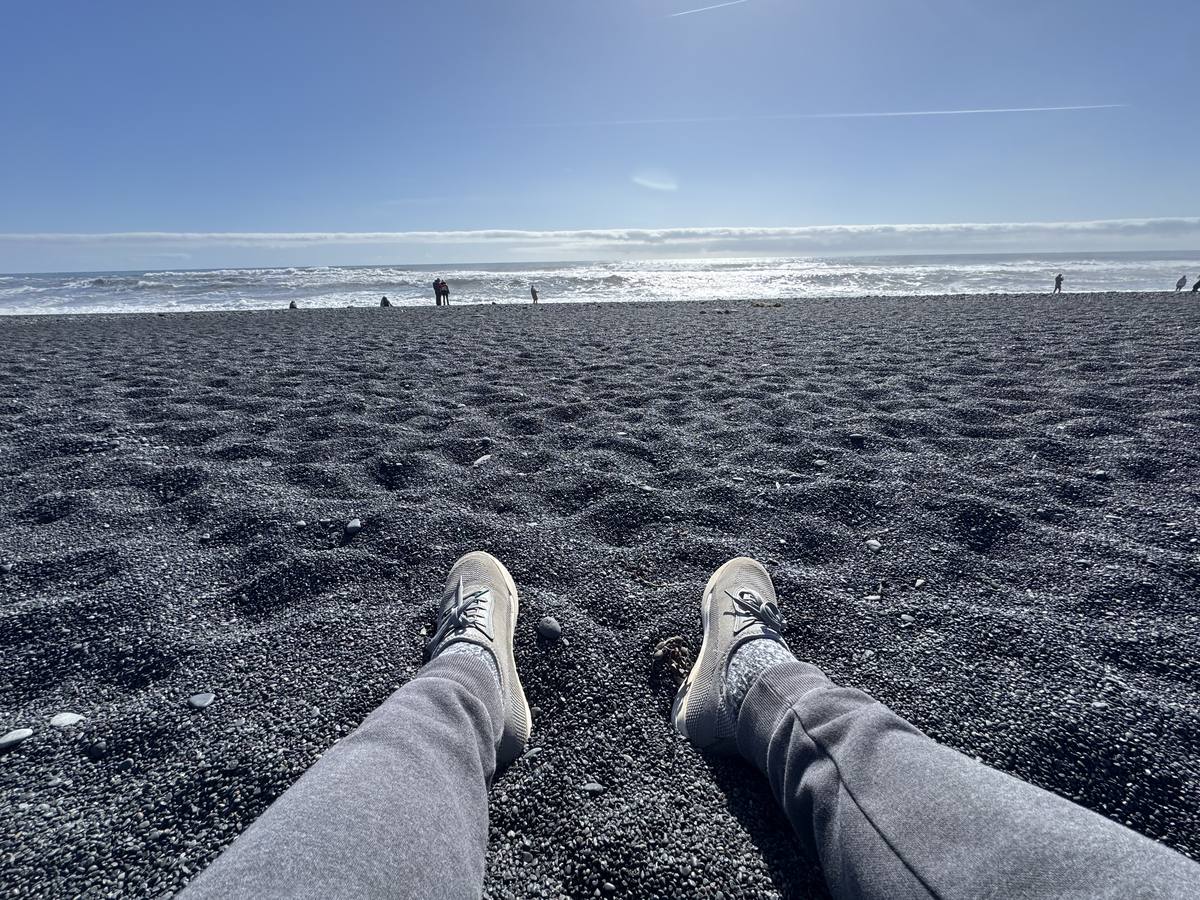
No, since the 2026 storms a lot of the fine sand is gone and much of the shore is coarse black pebble and grit. If you have seen the drone footage of perfect powder-black sand, set that image aside. After the February slope collapse and the storms that followed, a lot of the fine sand is gone for now, and what is underfoot in many spots is rounded pebble and coarse grit. It is still black. It is still striking. It just crunches instead of squeaks.
Standing there, it did not feel like a lesser beach. It felt like a rawer one. The cliff behind, Reynisfjall, still rises dark and streaked, and the columns are exactly as they were. What the storms took was the softest, most Instagram-friendly layer, not the beach itself. If you want to actually ride the black sand rather than only walk it, there are quad tours over the lava sands near Vik, a short drive east, and you book that separately from the day trip: book that separately here.
Are the basalt columns and the cave still there?
Yes, the columns are untouched, and the cave was open on my visit though access can shift with conditions. The basalt columns at the western end are the reason half the visitors are here, and they are untouched. They stack up like a giant church organ, and there is always a queue of people climbing the lower steps for a photo. The columns are geology on a scale of millions of years; a few storms were never going to rearrange them.
The Halsanefshellir cave, tucked into the cliff behind the columns, was open when I visited, though a guide told me access can shift with conditions and rockfall. If you are on a tour, your guide will know whether it is safe to walk in on the day.
How close do the waves really get?
Far closer than you think: sneaker waves run up the beach without warning and have killed people here. Here is the part I want you to take seriously. Reynisfjara's waves do not behave like normal waves. Every so often one runs up the beach two or three times farther than the ones before it, fast and silent, a sneaker wave. People have died here, pulled off their feet and dragged into freezing water with a vicious undertow.
I watched a family edge out for a photo with their backs to the sea, and I watched a guide jog over to move them back. That is the whole game at Reynisfjara: never turn your back on the ocean, and stay well up the beach. If you take one thing from this post, take that. The rest of why you cannot swim here is worth reading before you go.
Is Reynisfjara still worth visiting now?
Yes, a hundred times over; it is still one of the most dramatic places I take visitors on the whole South Coast. Yes. A hundred times, yes. This is still one of the most dramatic places I take visitors on the entire South Coast, and the crowds that keep showing up in 2026 clearly agree. If reaching it means driving Route 1 in winter, though, think hard about whether you want to. The guided day trip from Reykjavik puts the driving, the timing and the safety line in someone else's hands, and leaves you free to just stand there and listen to the stones.
What should I expect on the shore right now?
Coarser footing, unchanged columns, a shifting cave, deadly waves, and about thirty minutes on a tour.
| Thing | What to expect in 2026 |
|---|---|
| Underfoot | Coarser: rounded pebble and grit, less fine sand than older photos |
| Basalt columns | Unchanged, busy, climbable at the base |
| Halsanefshellir cave | Open on my visit; access varies with conditions |
| Sea stacks | Reynisdrangar unchanged, offshore to the east |
| The waves | Still deadly; stay well back, never turn your back |
| Time you need | 30 to 60 minutes; tours usually give about 30 |